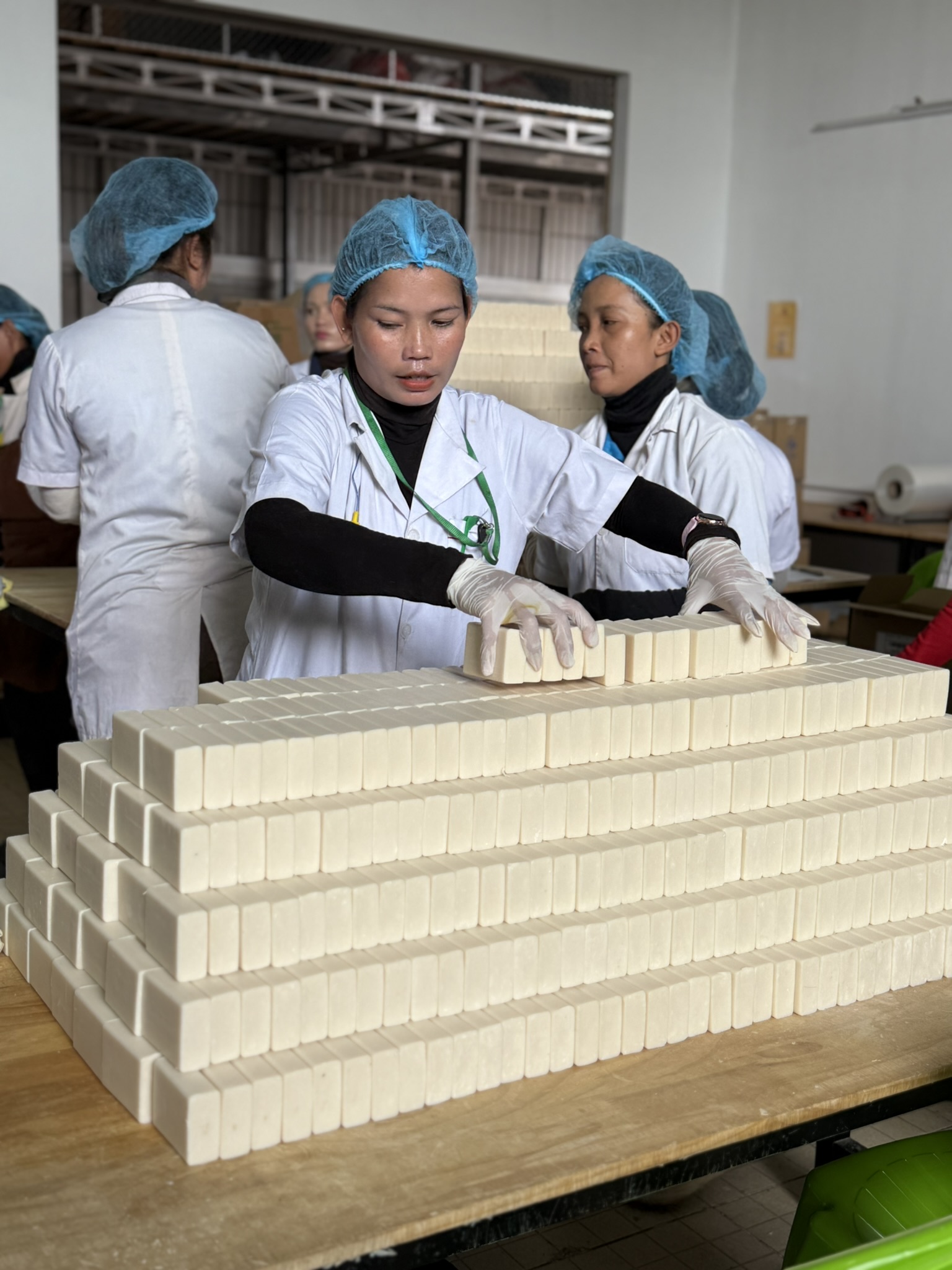
At Eco-Soap Bank, it's critical for us to understand the impact of our work. We also know that our partners and donors appreciate seeing the direct impact of their contributions. That's why our in-house research team continuously assesses our programs to ensure visibility and transparency for all.
A look back at two years of progress — 35.8 million soap bars distributed across 42 countries, research breakthroughs, and real stories from the women and communities at the heart of ESB's mission.
The FISCAL program shows how targeted debt management and financial education are helping women in Siem Reap build savings, reduce stress, and regain control of their lives.
In collaboration with World Vision, this study examines whether SOAPLAY™'s fun shapes and colors can nudge children toward better handwashing habits across 18 schools in Tanzania.
This research spotlight examines the real-world impact of soap distributions across refugee camps in Kenya, Uganda, and Bangladesh — measuring improvements in handwashing behavior and health outcomes among crisis-affected populations.
In this report, we trace the financial and social impacts among Eco-Soap Bank’s soap recyclers by tracking their ability to make tangible progress towards economic empowerment.
SOAPLAYTM now offers a highly affordable, incentivizing soap bar alternative ready for large-scale distribution to vulnerable communities of children around the world.
This report briefly outlines the environmental footprint created by the yearly stream of soap factory waste and explores the gains that can be made by expanding attempts to reduce it.
This report details how Eco-Soap Bank’s micro-enterprise model represents a viable solution to promote women’s economic empowerment and improve access to high-quality recycled soap in vulnerable, hard-to reach communities.
Eco-Soap Bank, in cooperation with Pauline Juliet, implemented a handwashing outreach program in 24 rural schools. This report summarizes the findings from the project evaluation.